







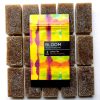



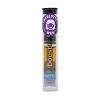
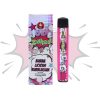
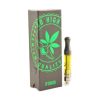

Want a little science with your psychedelia? Learn what hydrocarbon extraction is all about and how it can produce some truly potent products that just might blow your mind.
In this article, the all-things-cannabis experts at Honest Marijuana tell you everything you need to know about the process that brought you wax, shatter, and your other favorite concentrates.
What Are Hydrocarbons?
Hydrocarbons are a class of organic chemical compounds that are composed exclusively of the elements carbon (C) and hydrogen (H) (sorry O and N, this is a private party).
In all hydrocarbons, the carbon atoms make up the core or framework of the molecule, while the hydrogen atoms attach to the carbon atoms in various configurations.
Based on that definition, and with only a very basic understanding of chemistry, you might think there were very few hydrocarbons out there.
But, in fact, all those little Cs and Hs can join together in a surprisingly wide variety of configurations.
Common hydrocarbons include:
- Methane
- Ethane
- Propane
- Butane
- Pentane
- Hexane
- Heptane
- Octane
- Nonane
- Decane
If you’re like us, you’re roughly familiar with a few of those — methane from all the cow farts polluting our atmosphere, propane from the burgers we grill, butane from the BIC lighters we love, and octane from the three choices at the gas station (we’re cheap; we always choose 87).
To really understand how all the Cs and Hs smush together in new and interesting shapes, here are some skeletal formula — yes, that’s really what they’re called (it’s the only thing we took away from high school chemistry because it had the word ‘skeletal’ in it) — that illustrate the point.


Source: Britannica.com
In the world of cannabis, we’re really only concerned with two hydrocarbons — propane and butane — because manufacturers use them to produce some of our favorite products (e.g., wax and shatter).
Honestly, we’d be more excited about methane (it is the simplest hydrocarbon, after all), but we can’t mosey down to the corner Walmart and pick up a canister of bottled cow farts like we can propane and butane.
Anyway…
So why all this chemistry talk?
Because, as we mentioned somewhere in there amongst all the talk of cow farts, hydrocarbons can be used to make some pretty kick-ass stuff.
It all comes down to extraction.
What Is Extraction?

Extraction is the action of removing one thing from another thing. A simple example of this is pulling a splinter out of your finger.
Physical illustrations of extraction — like removing a splinter from your finger or your foot from a shoe — are probably the easiest to visualize for us macroscopic humans, but extraction can also be performed at the microscopic level with the help of chemicals.
Chemical extraction is especially useful for removing other chemicals from plant matter (see where we’re going with this?).
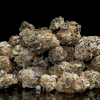
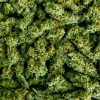
But what could we possibly need to extract from those cannabis buds on the table before us?
Cannabinoids!
What Are Cannabinoids?

Put simply, cannabinoids are chemicals.
More specifically, cannabinoids are chemical compounds that act on the cannabinoid receptors in your brain (CB1 and CB2).
Even more specifically, cannabinoids are the things that make marijuana the wonder that it is — they’re the stuff that gets you high, relieves your pain, and takes the edge off your anxiety.
Currently, there are around 113 different cannabinoids with familiar (and unfamiliar) names, including:
- THC
- CBC
- CBD
- THCA
- CBN
- CBDA
- CBG
- CBGA
- CBCA
- THCV
- CBDV
Wouldn’t it be cool if there was a way to strip all these cannabinoids (and other chemicals such as terpenes) from the plant matter and take them more directly?
You guessed it — there is! It’s chemical extraction.
And, as you can probably guess, hydrocarbons like propane and butane are the perfect chemicals for the job.
What Is Hydrocarbon Extraction?

Hydrocarbon extraction (itself a type of solvent extraction) is the umbrella term that refers to the process of using a hydrocarbon to extract the cannabinoids, terpenes, and flavonoids from the surface of the cannabis plant.
The type of hydrocarbon you use to extract the cannabinoids determines the final name of the process.
So, if you use propane, you’re conducting propane extraction. If you use butane, you’re conducting butane extraction. If you use methane, you’re conducting cow-fart extraction.
The whole concept of how we name hydrocarbon extraction is similar to the make and model of cars.
The umbrella term ‘hydrocarbon extraction’, refers to the make (e.g., Mazda or Ford or Chevy). The specific process, then, is like the model of a particular make (e.g., Miata, Focus, Silverado).
How It Works
Hydrocarbon extraction — and solvent extraction in general — breaks the bonds that hold the cannabinoids, terpenes, and flavonoids on the surface of the cannabis, and basically washes them off the plant.
The cannabinoids stay suspended in the hydrocarbon — a little bit like dissolving Kool-Aid in water — until the solvent (in this case, butane or propane) is forced or allowed to evaporate away.
The substance left behind after the hydrocarbon disappears is the stuff of legend.
It’s essentially pure cannabinoids with higher concentrations of THC or CBD than you could ever hope to get from the regular old bud that you roll in a joint, blunt, or spliff, or pack in the bowl of your bong.
We’ll talk about just how high those concentrations can get in the next section.
The Finished Products Of Hydrocarbon Extraction

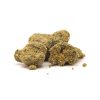
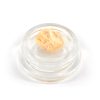
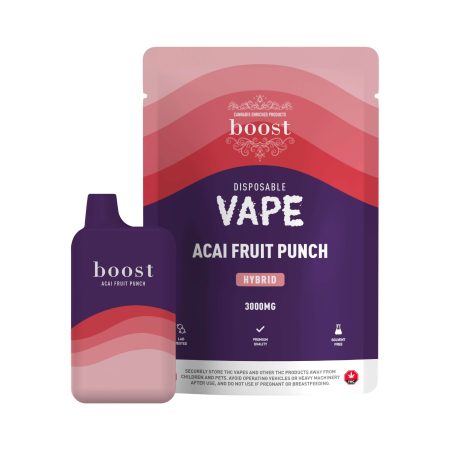
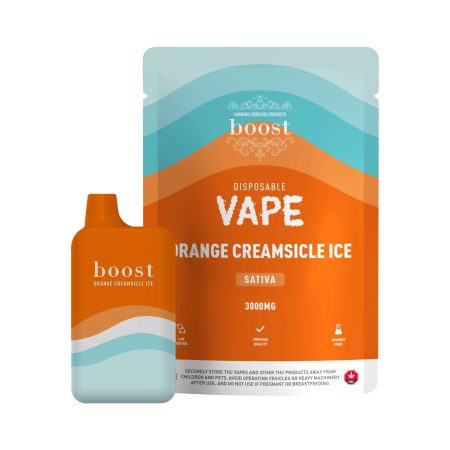
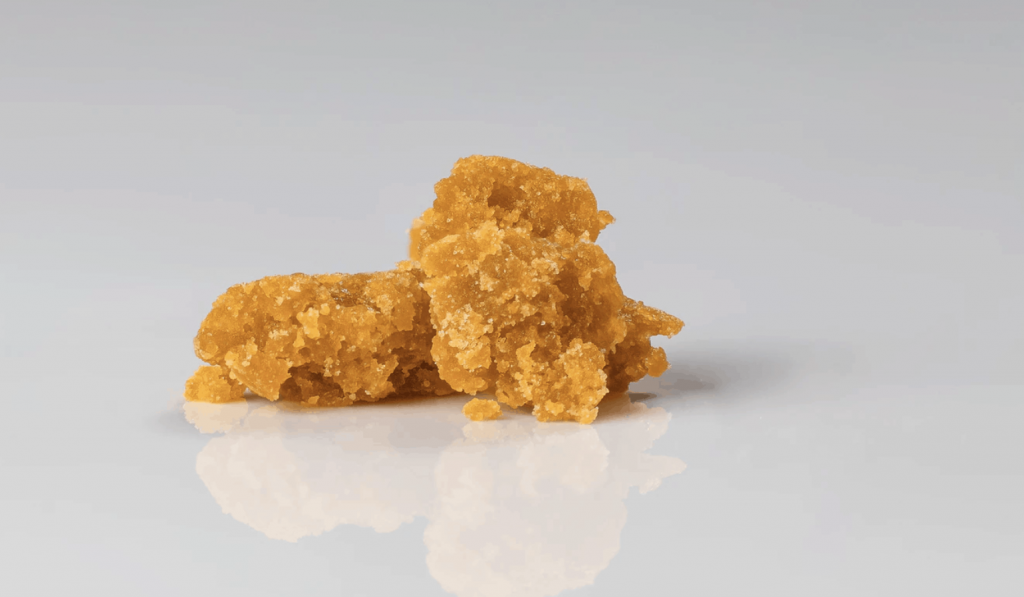
The finished products of hydrocarbon extraction range from solid to liquid and everything in between and go by what, to some, are very familiar names, including:
- Wax
- Shatter
- Crumble
- Honeycomb wax
- Budder
- THC Oil
- CBD Oil
- Cannabis Oil (a.k.a. Rick Simpson Oil)
- Hash
- Hash Oil
- Rosin
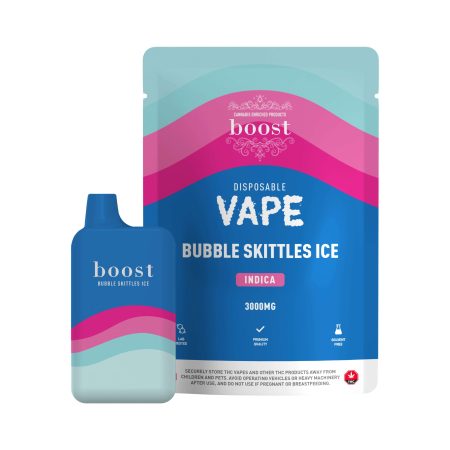
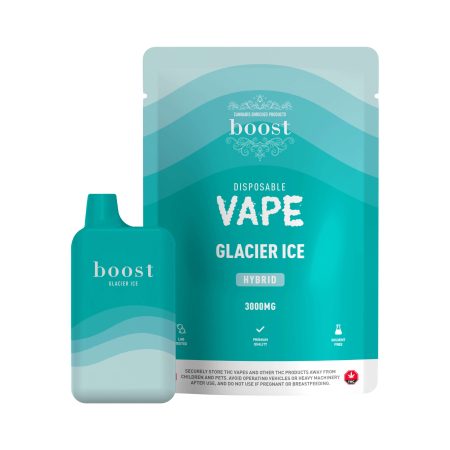
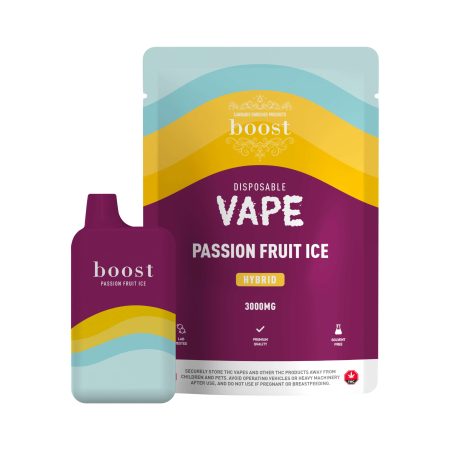
- Vape juice
- Tincture
- Liquid THC
- Honey oil (not to be confused with cannabis-infused honey)
Cannaculture lumps these products together under the name ‘concentrates’ or ‘extracts’ (they’re pretty much synonymous).
Concentrates are very much in vogue right now because they’re much more potent than regular bud.
Really good raw marijuana that you smoke typically contains 20% THC (for example). That’s plenty of THC to send you on a truly righteous journey.
But take that same marijuana, run it through hydrocarbon extraction, and the resultant concentrate (whatever its final form) can have upwards of 80% THC content.
Some intrepid manufacturers are even shooting for the coveted 100% THC content (which would basically be an isolate).
As an aside, we’re not sure we would want to try such a thing. Without the tempering effects of CBD and other THC antagonists, the concentrate would get you way too high, way too easily.
That’s no fun.
Given the choice, we’ll take a nice full-spectrum Blue Dream (and the groovy high it produces) over a concentrate (that has the potential to send us on a bad trip) every single time.
But that’s just us. You do what you wanna do. We won’t judge.
Should You DIY Hydrocarbon Extraction?

The unavailability of bottled cow farts aside, many of you will note that you can get your hands on butane and propane pretty easily.
So does that mean you should DIY hydrocarbon extraction? Is it even possible?
Yes, it is possible, but, no, you should probably not try it.
We say ‘probably’ because some intrepid soul is going to try and succeed, but the vast majority are likely to go down in flames — and we mean that literally.
Both butane and propane are highly-explosive chemicals.
Misusing them in a DIY-attempt to make your own hydrocarbon extract can result in extensive loss of property, serious injury, and even death.
It’s better to let those with plenty of experience, fancy/expensive equipment, and LOTS of personal protection equipment do the deed rather than try it yourself and explode something.
Don’t say we didn’t warn you.
Yes, there are plenty of tutorials out there, but is it really worth the risk? To our mind, life, limb, and a roof over our head is much more important than saying, “Look what I made!”
Hydrocarbon Extraction Is Good – Quality Bud Is Best
Yes, hydrocarbon extraction can produce some truly righteous products.
But even this powerful process is nothing without the most basic ingredient of all: high-quality bud.
Strain does play a role in the final experience (e.g., whether you want recreational or medicinal effects), but the quality of the strain has the most influence on what you’ll end up feeling.
That’s why we recommend products made from the highest quality raw bud (headies or beasters) available.
The end result will be much cleaner and the experience much purer.
Plus, with a good quality, organic strain — like those grown at Honest Marijuana — you’ll need less of the final product to experience the same effects. A little will go a long way.
You may have to pay a bit more for hydrocarbon extraction products made with high-quality bud, but you’ll be much happier with how you feel when you use them.
Talk to the budtenders at your local dispensary and find out what products they recommend.





You must be logged in to post a comment.