






















Quick answer
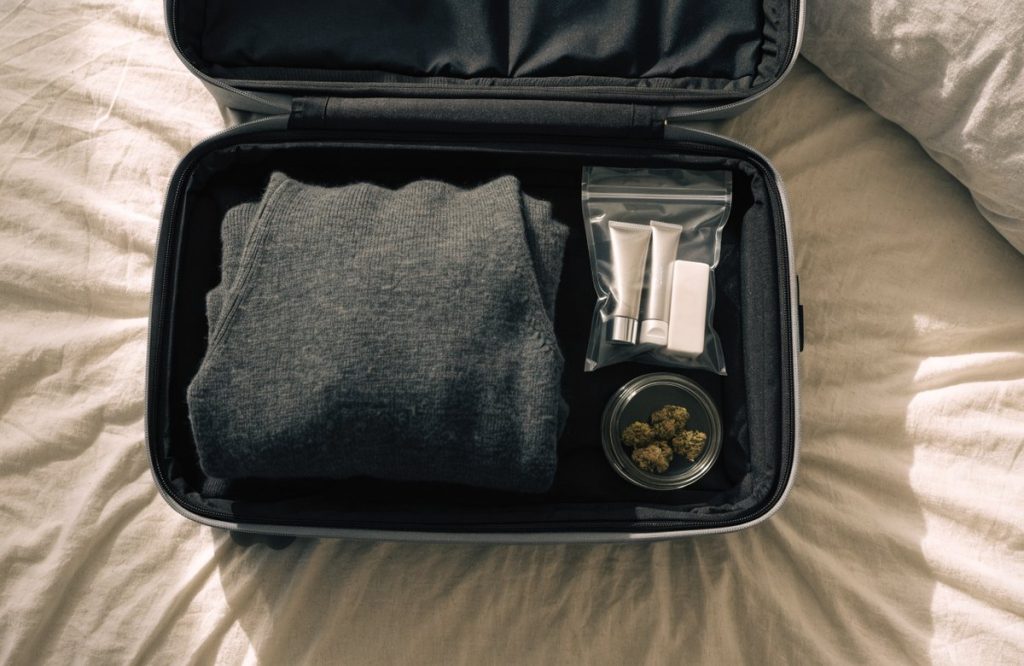
Yes, you can fly with weed in Canada on domestic flights. CATSA allows cannabis in carry-on and checked bags, and adults of legal age can carry up to 30 g of dried cannabis or the equivalent. These limits apply to legally purchased cannabis. Taking any cannabis on a flight out of Canada, including to the United States, is illegal.
Key takeaways
- Domestic flights: cannabis is allowed in carry-on and checked baggage (CATSA), up to 30 g of dried cannabis or the equivalent, “including in airports and on airplanes” (Government of B.C.).
- Equivalents under Schedule 3 of the Cannabis Act: 30 g dried = 7.5 g concentrates = 450 g solid edibles = 150 g fresh = 30 seeds.
- Vapes and dab pens go in the cabin, never in checked bags, and cannot be recharged on board (Transport Canada). Oils and drinks follow the 100 mL liquids rule.
- International flights: crossing the border with cannabis in either direction is illegal, even to a place where it is legal (travel.gc.ca).
- Source matters: the Act separately bans possessing cannabis you know is illicit. Bud Cargo is not a provincially licensed retailer, so carry only legally purchased cannabis when you fly.
Last updated 28 October 2026 · By the Bud Cargo team · General information, not legal advice
Can you fly with weed in Canada?
Yes, on a domestic flight you can carry cannabis within the legal limits, in either your carry-on or your checked bag. The Canadian Air Transport Security Authority (CATSA) lists cannabis as allowed in both, and notes that “passengers are responsible for knowing the laws and regulations in effect at their destination within Canada” (CATSA, Cannabis (marijuana)). The Government of British Columbia puts it plainly: adults can possess up to 30 g or the equivalent of non-medical cannabis in Canada, and “this includes in airports and on airplanes” (Government of B.C., Travelling with cannabis).
There are four conditions that matter more than the bag you pack it in:
| Condition | The rule | Source |
|---|---|---|
| Flight type | Domestic only. Flying out of Canada with cannabis is illegal. | CATSA; Cannabis Act s. 11 |
| Amount | No more than 30 g of dried cannabis or the equivalent in public | Cannabis Act s. 8(1)(a) |
| Age | Legal age at both ends: 18 in Alberta, 21 in Quebec, 19 everywhere else | Health Canada |
| Source | Legal cannabis; possessing cannabis you know is illicit is prohibited | Cannabis Act s. 8(1)(b) |
How many grams of weed can you carry in Canada?
An adult can carry up to 30 g of dried cannabis, or the equivalent amount of other products, in public, which includes airports and planes. Section 8(1)(a) of the Cannabis Act prohibits possessing more than that in a public place, and Schedule 3 of the Act sets how other products are converted:
| Class of cannabis (Schedule 3) | Equal to 1 g dried | Maximum at the 30 g limit |
|---|---|---|
| Dried cannabis (flower, pre-rolls) | 1 g | 30 g |
| Fresh cannabis | 5 g | 150 g |
| Solids containing cannabis (edibles) | 15 g | 450 g |
| Non-solids, other than beverages (oils, tinctures) | 70 g | 2,100 g |
| Cannabis concentrates (shatter, vape oil, rosin) | 0.25 g | 7.5 g |
| Cannabis beverages | 570 g | 17,100 g |
| Cannabis plant seeds | 1 seed | 30 seeds |
If you carry more than one type, the amounts are added together. A 28 g ounce of flower alone is just under the limit, so adding a single 1 g vape cartridge (worth 4 g of dried cannabis under the table) would put you over it. Our grams in an ounce guide breaks common weights down further.
Can I fly with joints in my carry-on?
Yes, on a domestic flight. Pre-rolled joints are dried cannabis, so CATSA treats them like flower: allowed in carry-on and checked bags, counted toward the 30 g limit by their weight. Our how many grams in a pre-roll guide shows how to add them up; most pre-rolls are 0.5 g or 1 g each.
Carrying is not the same as using. Halifax Stanfield International Airport says “cannabis use is prohibited on airport property”, including the outdoor areas set aside for tobacco smoking (Halifax Stanfield, Flying with cannabis). The same airport notes that you can drop cannabis in disposal bins at security if you change your mind before flying. Other airports set their own rules, so check yours.
Can I bring a dab pen on a plane?
On a domestic flight, yes, but it must go in your carry-on. CATSA allows e-cigarettes and vaping devices in carry-on, with refill liquid limited to 100 mL, and leaves checked baggage to the airline (CATSA, Electronic cigarettes). Transport Canada goes further: because devices have overheated and caused fires in checked bags, it “requires that e-cigarettes be carried in the cabin” and not in checked baggage, and they must not be recharged on board (Transport Canada safety advisory). Its definition covers devices that vaporize “a liquid nicotine solution or dry herbs”, so dry-herb vaporizers are included.
| Item | Carry-on | Checked bag | Extra rule |
|---|---|---|---|
| Flower, pre-rolls | Yes | Yes | Counts toward 30 g |
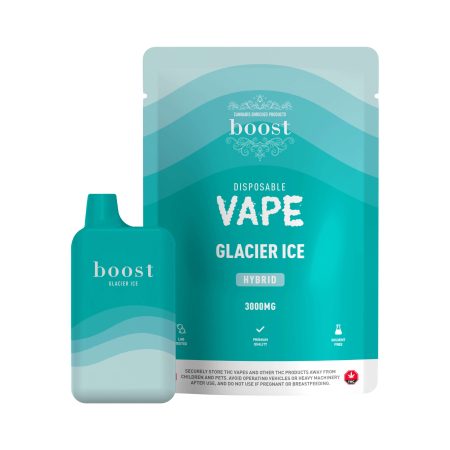
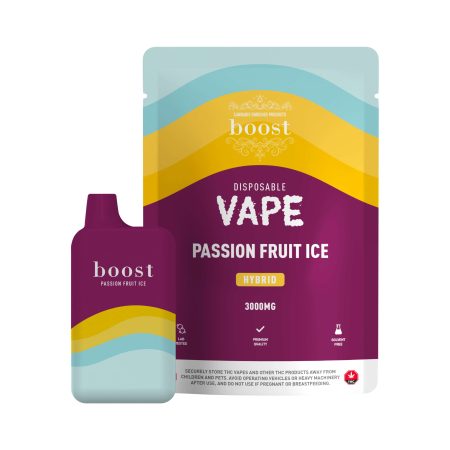
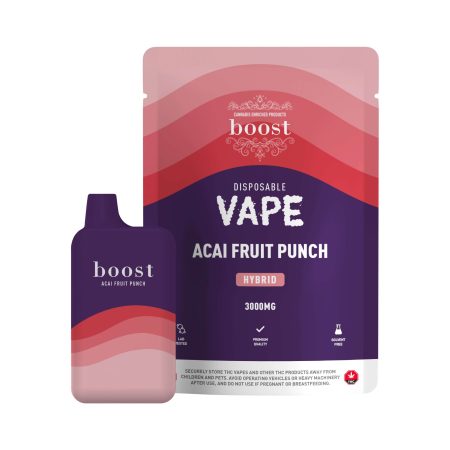
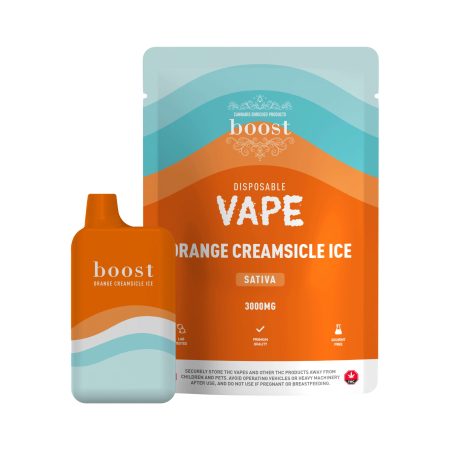
| Disposable vape, dab pen, 510 battery | Yes | No (Transport Canada) | No recharging on board; oil counts at 0.25 g = 1 g |
| Spare vape batteries | Yes | No | Protect each one against short circuits |
| Cannabis oil, tinctures, drinks | Up to 100 mL per container | Yes | In your 1-litre clear LAG bag |
| Solid edibles | Yes | Yes | 15 g of product = 1 g dried |
Our 510 cartridges vs disposable vape pens guide explains the difference between the two formats if you are not sure which one you have.
Can you fly with edibles and cannabis oil?
Yes, on domestic flights, within the equivalency limits and the liquids rule. Solid edibles such as gummies, chocolates and lollipops count at 15 g of product per 1 g of dried cannabis, so up to 450 g of edibles by weight. Our THC lollipops guide covers how edible doses work.
Liquids are where people get caught at security. CATSA says “liquid and topical forms are subject to liquids, aerosols and gels (LAGs) restrictions in carry-on baggage” and must go in the 1-litre clear re-sealable bag with your other liquids. In practice that means containers of 100 mL or less in your carry-on; larger bottles go in checked baggage. CATSA allows more than 100 mL of cannabis oil in carry-on only when it is used for medical purposes and presented to the screening officer.
Can you fly with weed to the US or another country?
No. Section 11 of the Cannabis Act says “the importation or exportation of cannabis is prohibited” unless authorized, and the Government of Canada warns that “it is illegal to take cannabis, including products containing cannabis, across the Canadian border” (travel.gc.ca, Drugs, alcohol and travel). That applies “even if you are travelling to or from a place where cannabis is legal or decriminalized”, so a flight to Colorado, California or Thailand is no exception.
The consequences are serious: travel.gc.ca says you “could be charged with a criminal offence and be denied entry into other countries in the future”. If you arrive in Canada with cannabis, you must declare it to the Canada Border Services Agency. Medical authorization does not change this; travelling abroad with medical cannabis needs an exemption from Health Canada, and the destination country’s own approval.
Do the rules change by province?
The 30 g limit is federal and the same everywhere, but the legal age and local rules on use are set by each province and territory. You need to meet the age where you depart and where you land:
| Province or territory | Minimum age |
|---|---|
| Alberta | 18 |
| Quebec | 21 |
| British Columbia, Saskatchewan, Manitoba, Ontario, New Brunswick, Nova Scotia, Prince Edward Island, Newfoundland and Labrador, Yukon, Northwest Territories, Nunavut | 19 |
So an 18-year-old can carry cannabis in Calgary but not land with it in Vancouver, and a 20-year-old can fly from Toronto but not into Montreal. Ages are from Health Canada’s provinces and territories page. Provinces also set rules on where you can consume cannabis once you arrive, which CATSA leaves to you to check.
Does it matter where your cannabis came from?
Yes, and this is the part most travel guides leave out. The 30 g limit in section 8(1)(a) is only one of the possession rules. Section 8(1)(b) separately prohibits an adult from possessing “any cannabis that they know is illicit cannabis”, and the Act defines illicit cannabis as cannabis sold, produced or distributed by someone prohibited from doing so under federal or provincial law (Cannabis Act, sections 2 and 8).
Bud Cargo is a mail-order dispensary, not a provincially licensed retailer, and we will not tell you otherwise. The domestic flying rules in this guide are written for legally purchased cannabis. If you are going to fly with cannabis, the straightforward way to stay inside those rules is to carry product bought from your province’s authorized retailer, within the 30 g limit, on a domestic flight only. Our guide to cannabis laws in Canada covers how legal sales work in each province.
Frequently asked questions
Can you fly with weed in Canada?
On domestic flights, yes, within limits. CATSA allows cannabis in carry-on and checked bags, and adults can possess up to 30 g of dried cannabis or its equivalent, including in airports and on planes. You must be of legal age where you fly from and where you land. These limits apply to legal cannabis; the Cannabis Act separately bans possessing cannabis you know is illicit. Flying out of Canada with any cannabis is illegal.
How many grams of weed can you carry in Canada?
An adult can carry up to 30 g of dried cannabis, or the equivalent, in public. Schedule 3 of the Cannabis Act sets the equivalents: 30 g dried equals 150 g fresh, 450 g of solid edibles, 2.1 kg of non-solid products, 7.5 g of concentrates or 30 seeds. If you carry several types, they are added together.
Can I fly with joints in my carry-on?
Yes, on a domestic flight. Pre-rolled joints are dried cannabis, so CATSA allows them in carry-on and checked bags, and they count toward the 30 g limit. You cannot light up at the airport: Halifax Stanfield, for example, prohibits cannabis use anywhere on airport property, including designated smoking areas.
Can I bring a dab pen on a plane?
On a domestic flight, yes, but keep it in your carry-on. CATSA allows vaping devices in carry-on, and Transport Canada requires e-cigarettes and vaporizers to be carried in the cabin, not in checked bags, and not recharged on board. Oil or concentrate in the pen counts toward your limit, with 0.25 g of concentrate equal to 1 g of dried cannabis.
Can I fly with edibles in Canada?
Yes, on domestic flights. Solid edibles count toward the 30 g limit at 15 g of product per 1 g of dried cannabis, so up to 450 g. Drinks, oils and other liquids are also subject to CATSA’s 100 mL liquids rule in carry-on and must go in your 1-litre clear bag.
Can I take weed from Canada to the US?
No. Taking cannabis across the Canadian border in either direction is illegal unless authorized, even if it is legal where you are going. The Government of Canada warns that you could be charged with a criminal offence and denied entry to other countries in the future.
Can you smoke weed at a Canadian airport?
Not on airport property in general. Halifax Stanfield, for example, says cannabis use is prohibited on airport property, including the outdoor areas set aside for tobacco smoking. Check the rules of your airport before you go.
Does it matter where the cannabis came from?
Yes. The 30 g carry limit is in section 8(1)(a) of the Cannabis Act, and section 8(1)(b) separately prohibits possessing any cannabis you know is illicit, meaning cannabis sold by someone who is not authorized to sell it under federal or provincial law. Bud Cargo is not a provincially licensed retailer. If you travel, carry cannabis bought from your province’s authorized retailer.
Sources: CATSA, Cannabis (marijuana). CATSA, Electronic cigarettes and accessories. Transport Canada, Safety advisory: fire risk of electronic cigarettes in checked baggage. Government of Canada, Drugs, alcohol and travel. Government of British Columbia, Travelling with cannabis. Halifax Stanfield International Airport, Flying with cannabis. Health Canada, Cannabis in the provinces and territories. Cannabis Act (S.C. 2018, c. 16), sections 2, 8 and 11 and Schedule 3. This guide is general information, not legal advice; rules were checked on 28 October 2026.




You must be logged in to post a comment.