












Quick answer: Pakistani hash is cannabis resin from northern Pakistan, made by threshing dried plants to collect the resin glands and pressing them into a dark, soft, pliable block. Locals call the top grade garda. It is usually stronger than flower, and Bud Cargo sells a Pakistani-style hash from $22 a gram.
Key takeaways
- Traditional Pakistani hash is dry-sifted, not hand-rubbed: dried plants are threshed through cloth, and the resin powder is pressed and aged.
- The prized grade from the Tirah valley is called Awal Namber Garda, Pashto for “top-grade dust”, and is aged in goat or sheep skins for at least three months.
- Resin seized in Europe rose from 8.1% to 17.2% THC between 2006 and 2016, versus 5.0% to 10.2% for herbal cannabis.
- In Canada, 0.25 g of concentrate counts as 1 g of dried cannabis, so the 30 g public limit equals 7.5 g of hash.
- Bud Cargo’s Pakistani hash is $22 for 1 g up to $341.88 for 28 g (about $12.21 a gram).
Last updated 23 November 2026 from live stock · By the Bud Cargo team
What is Pakistani hash?
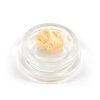
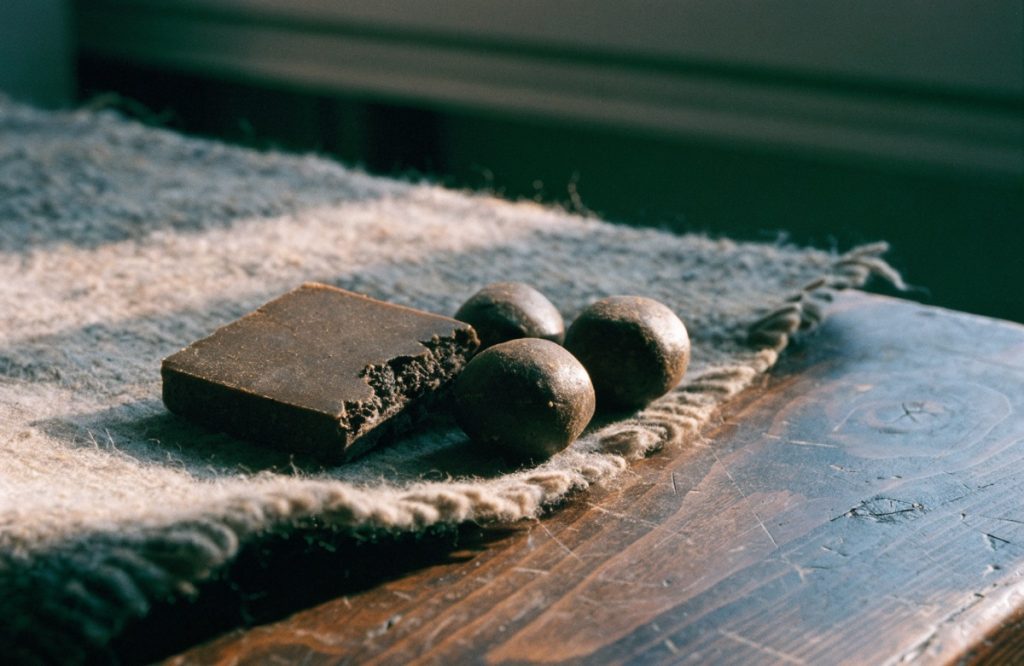
Pakistani hash is concentrated cannabis resin made in the mountainous north of Pakistan, especially the tribal areas along the Afghan border. It is typically dark brown to black, dense, and soft enough to bend when warm. Wikipedia’s hashish article lists Pakistan alongside Afghanistan, India, Lebanon, Morocco and Nepal as places with a long history of hash use, and notes that in the late 1960s and early 1970s most of the hashish sold in Europe came from Pakistan and Afghanistan.
Two local words come up in every description. Garda means the sifted resin powder and the hash pressed from it. Charas is the wider South Asian word for hash, and strictly refers to resin rubbed by hand from living plants. Most Pakistani hash sold abroad is the garda style.
If you are new to resin in general, our what is hash guide covers the basics, and hash vs weed explains how the high differs from flower.
How is Pakistani hash made?
Pakistani hash is made by dry-sifting: dried plants are threshed to knock off the resin glands, which are then pressed and aged. A 2012 report by Radio Free Europe/Radio Liberty from Jamrud, at the foot of the Khyber Pass, describes the process used for the Tirah valley’s best grade:
- Cut and dry. Mature plants are cut and hung upside down until dry.
- Thresh. A thin cloth is used to beat the plants so the resin glands from the buds and upper leaves fall through as a fine powder.
- Crush. The residue is crushed into a fine, malleable powder, the garda.
- Age in skins. The powder is stitched into fresh goat or sheep skins, each holding 6 to 10 kg, and kept out of direct sun for at least three months. Producers say the skin keeps the resin oily and soft.
- Press. The aged resin is worked into blocks or slabs.
The same report says lower grades sold outside the region are sometimes padded with henna, chewing gum or other fillers, which is why texture and smell matter when judging hash. Wikipedia’s hashish article also notes that adulterants are added to some hash to increase weight or change its appearance.
Pakistani hash vs Afghan, Moroccan and Lebanese hash
The regional styles differ mainly in process, which changes the colour and texture. Afghan and Pakistani hash is pressed and kneaded into a soft, dark, pliable block; Moroccan is sieved and usually lighter and more crumbly; Lebanese sits between them. Here is how the styles compare, with what we stock:
| Style | How it is made | Typical look and feel | At Bud Cargo |
|---|---|---|---|
| Pakistani (garda) | Threshed through cloth, pressed, often aged | Dark brown to black, soft, pliable | Pakistani Hash, $22/g |
| Afghan | Sifted, then kneaded and pressed by hand | Very dark, soft, oily | Kabul Afghan Hash, $20/g |
| Lebanese | Sifted and pressed | Between Afghan and Moroccan in colour and firmness | Lebanese Hash, $22/g |
| Moroccan | Sieved over screens, then pressed | Lighter brown, drier, crumbly | Not in stock |
| Himalayan charas | Rubbed by hand from living plants | Dark, sticky, often rolled into balls or sticks | Not in stock |
| Kief (unpressed) | Loose sifted resin powder | Light tan powder | Kief 2 g, $15 |
None of these is automatically better. Soft Pakistani or Afghan hash is easy to crumble into a joint; drier Moroccan suits people who like to sprinkle it. Our kief guide covers the unpressed powder that all pressed hash starts from.
How strong is Pakistani hash?
Pakistani hash is usually stronger than flower, but there is no fixed THC number for the style. Potency depends on how pure the sifted resin is and how much plant matter is left in it. The best large data set is European: Freeman et al., Addiction, 2019 analysed national monitoring data from 28 EU countries, Norway and Turkey and found:
| Product (Europe) | Mean THC 2006 | Mean THC 2016 |
|---|---|---|
| Cannabis resin (hash) | 8.14% | 17.22% |
| Herbal cannabis | 5.00% | 10.22% |
The authors link the sharp rise in resin potency after 2011 to new resin production methods. Wikipedia’s hashish article notes that hand-rubbed charas can reach up to 60% THC, so individual lots vary widely. We do not publish a lab THC figure for our hash.
What is the strongest form of hash?
No single style always wins. Methods that separate resin glands cleanly, like careful dry-sifting and ice-water extraction, tend to give stronger, purer hash than resin with lots of leaf left in. With any hash, Canada’s Lower-Risk Cannabis Use Guidelines advise choosing lower-potency products where you can and using less, so start with a small piece.
How do you use Pakistani hash?
The easiest way is to crumble a small amount into a joint with flower or on top of a bowl. Pure hash burns poorly on its own, as Wikipedia’s hashish article notes. Soft Pakistani-style hash breaks up easily after a few seconds of gentle warmth from your fingers; firmer pieces can be warmed briefly and crumbled.
- Joint or blunt: sprinkle small crumbles along the flower.
- Bowl or pipe: a layer of flower first, then a small piece of hash on top.
- Vaporizer: only in devices rated for concentrates.
- Edibles: hash must be heated (decarboxylated) first to have the expected effect when eaten.
When smoked, Wikipedia gives an onset within about 15 minutes, and 30 to 60 minutes when eaten. Store it cool, dark and wrapped; hash keeps well compared with most concentrates.
How much Pakistani hash can you carry in Canada?
Adults can carry up to 7.5 g of hash in public. Schedule 3 of the Cannabis Act says 0.25 g of cannabis concentrate is equal to 1 g of dried cannabis, and the public possession limit is 30 g of dried cannabis or its equivalent:
| Amount of hash | Counts as dried cannabis | Within 30 g limit? |
|---|---|---|
| 1 g | 4 g | Yes |
| 3.5 g | 14 g | Yes |
| 7 g | 28 g | Yes |
| 14 g | 56 g | No (store it at home) |
| 28 g | 112 g | No (store it at home) |
Where can I buy Pakistani hash in Canada?
Bud Cargo sells a Pakistani-style hash in five sizes, in stock as of 23 November 2026:
| Size | Price | Per gram |
|---|---|---|
| 1 g | $22.00 | $22.00 |
| 3.5 g | $66.00 | $18.86 |
| 7 g | $122.10 | $17.44 |
| 14 g | $213.68 | $15.26 |
| 28 g | $341.88 | $12.21 |
Order it on the Pakistani Hash product page. We describe it by style; we do not have origin certification or lab results for the lot. Pineapple Hash, Lebanese Hash and Golden Hash share the same $22 to $341.88 ladder, and Kabul Afghan Hash is a little cheaper at $20 a gram. See every option in our hash category or the wider concentrates range.
Orders ship across Canada for $25 to BC, Alberta, Saskatchewan and Manitoba, $30 to Ontario, Quebec and Atlantic Canada, and $35 to the territories. Shipping is free on orders over $150 (over $250 to the territories). You can pay by Interac e-Transfer or credit card. Bud Cargo is a mail-order dispensary, not a provincially licensed retailer.
Frequently asked questions
What is Pakistani hash?
Pakistani hash is cannabis resin from northern Pakistan, made by threshing dried plants to collect the resin glands and pressing them into a dark, soft, pliable block. Locally the best grade is called garda, and the hand-rubbed style is called charas.
What is the strongest form of hash?
No single style is always strongest, because potency depends on how cleanly the resin glands are separated from plant matter. Wikipedia notes hand-rubbed charas can reach up to 60% THC, while resin seized across Europe averaged about 17% THC in 2016.
Which is the best hash in the world?
There is no objective best. The famous traditional styles are Afghan and Pakistani (dark and pliable), Moroccan (lighter and crumbly), Lebanese (in between) and Himalayan charas. Most people choose by texture, smell and how they plan to use it.
Is hash illegal in Pakistan?
Yes. Radio Free Europe/Radio Liberty reported in 2012 that hashish is illegal in Pakistan, even though it is widely available in the northern tribal regions near the Afghan border where much of it is made.
Is Pakistani hash stronger than weed?
Usually, yes. Hash is concentrated resin, so it tends to test higher than flower. Across Europe in 2016, resin averaged 17.2% THC versus 10.2% for herbal cannabis, and Canada’s Cannabis Act counts 0.25 g of concentrate as equal to 1 g of dried cannabis.
How do you smoke Pakistani hash?
Crumble a small amount into a joint with flower, or put it on top of a bowl. Soft Pakistani-style hash breaks apart easily with brief, gentle warmth. It also works in vaporizers rated for concentrates. Pure hash burns poorly on its own.
How much is Pakistani hash at Bud Cargo?
Our Pakistani hash is $22 for 1 g, $66 for 3.5 g, $122.10 for 7 g, $213.68 for 14 g and $341.88 for 28 g, about $12.21 a gram at the ounce size. It is in stock as of 23 November 2026.
Sources: Radio Free Europe/Radio Liberty, “Pakistan’s Goat-Grown Hashish” (2012); Wikipedia’s hashish article; Freeman et al., Addiction, 2019, “Increasing potency and price of cannabis in Europe, 2006–16”; Schedule 3 of the Cannabis Act; Canada’s Lower-Risk Cannabis Use Guidelines. Prices and stock checked on budcargo.net on 23 November 2026.

You must be logged in to post a comment.