














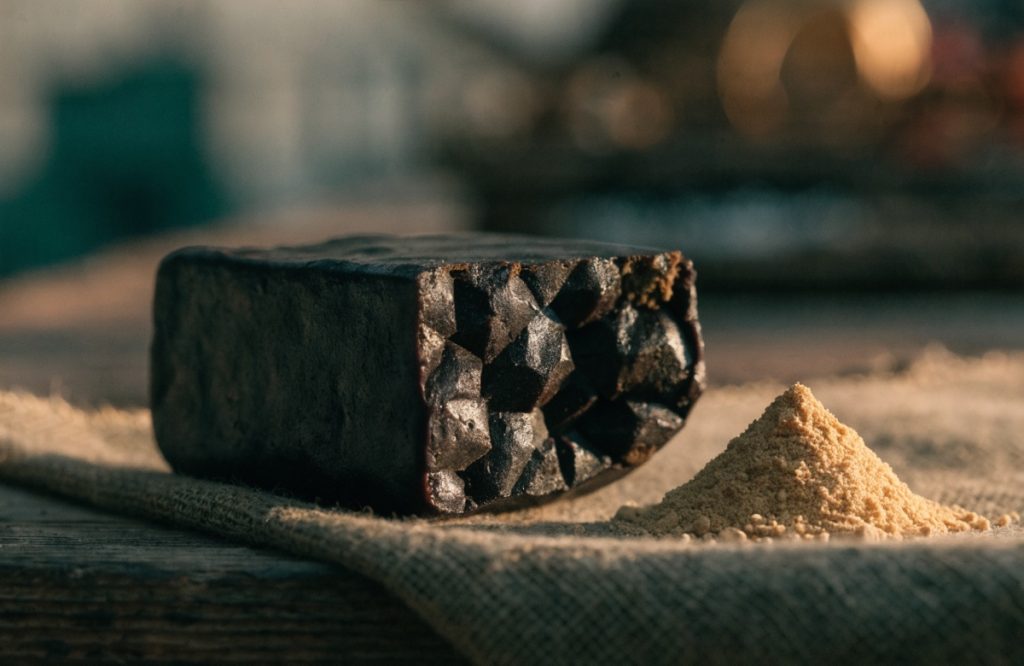
Quick answer: Afghan hash is cannabis resin from Afghanistan, made by threshing and sieving dried plants into a resin powder called garda, then pressing it with warmth into a dark, soft, pliable block. The first sieving gives the purest grade. It is usually stronger than flower, and Bud Cargo sells Kabul Afghan hash from $20 a gram.
Key takeaways
- UNODC’s 2010 survey found Afghanistan produced the world’s largest supply of hashish, an estimated 1,200 to 3,700 tonnes of resin powder that year.
- Resin powder is graded by sieving round: first garda is the purest and dearest, at a weighted farm-gate average of US$86/kg versus $39/kg for third garda.
- UNODC did not test THC, and says the potency of Afghan garda is unknown; in Europe, seized resin averaged 17.2% THC in 2016.
- In Canada, 0.25 g of hash counts as 1 g of dried cannabis, so the 30 g public limit equals 7.5 g of hash.
- Bud Cargo’s Kabul Afghan Hash runs from $20 for 1 g to $310.80 for 28 g (about $11.10 a gram).
Last updated 24 November 2026 from live stock · By the Bud Cargo team
What is Afghan hash?
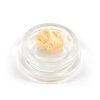
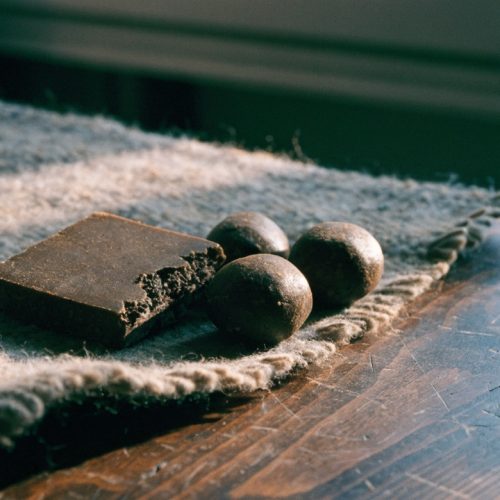
Afghan hash is pressed cannabis resin made in Afghanistan, traditionally from the short, broad-leaved indica plants that grow there. It is usually very dark brown to black on the outside, softer and lighter inside, and pliable enough to bend when warm. In Afghanistan the finished product is called charas, and the sifted resin powder it is made from is called garda, according to UNODC’s Afghanistan Cannabis Survey 2010.
It has been one of the best-known hash styles for decades. Wikipedia’s hashish article notes that the large European hash markets of the late 1960s and early 1970s were supplied mostly from Pakistan and Afghanistan, and that by 2008 Afghanistan was regarded as the biggest producer of higher-quality hashish. Wikipedia’s Cannabis in Afghanistan article records that a 1973 crackdown under King Zahir Shah pushed Western buyers toward Pakistani sources for several years, which is one reason Pakistani hash and Afghan hash are so closely linked in style.
New to resin? Our what is hash guide covers the basics, and hash vs weed explains how the high compares with flower.
How is Afghan hash made?
Afghan hash is made by dry-sifting: dried plants are threshed and sieved to separate the resin glands, and the resulting powder is pressed into blocks. UNODC describes the process from its village surveys:
- Dry. Harvested plants are dried before processing. In the 2010 survey, the main resin processing took place in January, months after harvest.
- Thresh and sieve. The dried plants are threshed and sieved, producing a powdery mix of resin and fine plant matter: garda.
- Sieve again for grades. Repeated sieving yields first, second and third garda. The first, gentle shaking gives the purest powder.
- Press. Further processing turns garda into hashish. Wikipedia’s hashish article explains that sifted resin is compressed with the aid of heat, and that pure sift becomes gooey and pliable, which is where Afghan hash gets its soft, oily texture.
UNODC also notes that there are no standard grades across regions, and that first garda is sometimes mixed with powder from later sieving rounds and still sold as “first”. In other words, the grade name alone does not prove purity.
What do first, second and third garda mean?
They are purity grades: the earlier the sieving round, the more resin and the less plant matter the powder contains. UNODC’s 2010 survey measured yields and farm-gate prices for each grade:
| Grade | Average yield (kg per hectare) | Share of 2010 output | Weighted farm-gate price (US$/kg, Jan 2011) |
|---|---|---|---|
| First garda | 63 | 49% | $86 |
| Second garda | 41 | 32% | $66 |
| Third garda | 24 | 19% | $39 |
| All grades | 128 | 100% | n/a |
Prices varied a lot by region: first garda averaged US$166/kg in the north and north-east (Badakhshan, Balkh, Takhar) against $79/kg elsewhere. The survey estimated 9,000 to 29,000 hectares under cannabis in 19 of the country’s 34 provinces, grown by about 47,000 households, and the most common reason farmers gave for growing it was the high sale price of hashish compared with other crops.
Is Afghan hash indica or sativa?
The plants behind Afghan hash are indica. The Afghani landrace is listed by Leafly’s Afghani profile as an indica with about 18% THC and 4.4 stars from 726 ratings, with earthy, pungent and sweet flavours. Hash itself is a concentrate, so it is usually described by where and how it was made rather than as indica or sativa.
Afghani genetics are also behind many modern strains. Critical Mass, for example, is Afghani crossed with Skunk #1. Indica and sativa labels describe how people report a strain feels rather than a measured genetic category; our indica vs sativa guide explains the difference.
What is the strongest hash?
No style always wins, because strength depends on resin purity, not origin. Hash made from the first, gentlest sieving, or from careful ice-water extraction, usually has more resin glands and less leaf than lower grades. UNODC did not test the chemistry of Afghan garda and states its potency level is unknown, so any single THC number for “Afghan hash” is a guess.
The best broad data come from Europe, where Freeman et al., Addiction, 2019 analysed national testing data from 30 countries:
| Product (Europe) | Mean THC 2006 | Mean THC 2016 |
|---|---|---|
| Cannabis resin (hash) | 8.14% | 17.22% |
| Herbal cannabis | 5.00% | 10.22% |
We do not publish a lab THC figure for our hash. Because resin is more concentrated than flower, Canada’s Lower-Risk Cannabis Use Guidelines advice to start low and go slow applies even more: try a small crumb first.
Afghan hash vs Pakistani, Lebanese and Moroccan hash
Afghan hash is closest to Pakistani hash: both are dry-sifted and pressed into soft, dark, pliable blocks. Moroccan is usually drier and lighter. Here is how the styles we stock compare:
| Style | Typical texture | Typical colour | At Bud Cargo (1 g / 28 g) |
|---|---|---|---|
| Afghan | Soft, oily, pliable | Very dark brown to black | Kabul Afghan Hash, $20 / $310.80 |
| Pakistani · guide | Soft, pliable | Dark brown to black | Pakistani Hash, $22 / $341.88 |
| Lebanese | Firmer than Afghan | Brown, between Afghan and Moroccan | Lebanese Hash, $22 / $341.88 |
| Golden | Firm, crumbles | Golden to light brown | Golden Hash, $22 / $341.88 |
| Moroccan | Dry, crumbly | Light brown | Not in stock |
| Kief (unpressed sift) | Loose powder | Light tan | Kief 2 g, $15 |
Kief is essentially what all pressed hash starts as; our kief guide explains how it differs.
How do you use Afghan hash?
The simplest way is to crumble a small amount into a joint with flower or on top of a bowl, because hash on its own burns poorly. Soft Afghan hash usually breaks apart after a few seconds of warmth between your fingers.
- Joint: roll small crumbs along the flower.
- Bowl or pipe: flower first, then a small piece of hash on top.
- Vaporizer: only in devices made for concentrates.
- Edibles: heat (decarboxylate) it first; Wikipedia’s hashish article gives an onset of 30 to 60 minutes when eaten versus about 15 minutes when smoked.
Store it wrapped, cool and dark. Afghan hash keeps its texture far longer than most modern concentrates, but heat softens it and light degrades it.
Where can I buy Afghan hash in Canada?
Bud Cargo sells Kabul Afghan Hash in five sizes, all in stock as of 24 November 2026:
| Size | Price | Per gram |
|---|---|---|
| 1 g | $20.00 | $20.00 |
| 3.5 g | $60.00 | $17.14 |
| 7 g | $111.00 | $15.86 |
| 14 g | $194.25 | $13.88 |
| 28 g | $310.80 | $11.10 |
Order it on the Kabul Afghan Hash product page; it is the lowest-priced pressed hash on our menu by the gram. We sell it by style and do not have origin certification or lab results for the lot. Licensed producers also sell hash under the name “Afghan Black” through provincial stores, so the name on its own describes the style, not the origin. Browse all hash.
Adults may carry up to 7.5 g of hash in public, because Schedule 3 of the Cannabis Act counts 0.25 g of concentrate as 1 g of dried cannabis against the 30 g limit. A 14 g or 28 g bag is for home storage.
Orders ship across Canada for $25 to BC, Alberta, Saskatchewan and Manitoba, $30 to Ontario, Quebec and Atlantic Canada, and $35 to the territories. Shipping is free on orders over $150 (over $250 to the territories). You can pay by Interac e-Transfer or credit card. Bud Cargo is a mail-order dispensary, not a provincially licensed retailer.
Frequently asked questions
What is Afghani hash?
Afghani (Afghan) hash is cannabis resin from Afghanistan. Dried plants are threshed and sieved into a resin powder called garda, which is then pressed with warmth into a dark, soft, pliable block. Locally the finished hash is called charas.
What is the strongest hash?
No regional style is always strongest. Potency depends on how much pure resin the hash contains, so the cleanest dry-sift and ice-water hash tend to test highest. Across Europe, seized resin averaged 17.2% THC in 2016, up from 8.1% in 2006.
Is Afghan a sativa or indica?
The Afghani landrace that Afghan hash comes from is an indica. Leafly lists Afghani as an indica with about 18% THC. Hash itself is a resin concentrate, so it is described by origin and process rather than as indica or sativa.
What does garda mean?
Garda is the local name in Afghanistan for the powdery resin produced by threshing and sieving dried cannabis. UNODC says it is graded as first, second and third garda, and first garda has the most resin and sells for the highest price.
What is Afghan Black hash?
Afghan Black is a trade name for very dark, soft, Afghan-style pressed hash. In Canada the name is also used on licensed-producer hash sold in provincial stores, so it describes a style rather than guaranteeing the resin came from Afghanistan.
How much Afghan hash can you carry in Canada?
Up to 7.5 g in public. Schedule 3 of the Cannabis Act counts 0.25 g of concentrate as 1 g of dried cannabis, and the public possession limit is 30 g of dried cannabis or its equivalent.
How much is Afghan hash at Bud Cargo?
Our Kabul Afghan Hash is $20 for 1 g, $60 for 3.5 g, $111 for 7 g, $194.25 for 14 g and $310.80 for 28 g, about $11.10 a gram at the ounce size. It is in stock as of 24 November 2026.
Sources: UNODC’s Afghanistan Cannabis Survey 2010 (UNODC and Afghanistan’s Ministry of Counter Narcotics, 2011); Wikipedia’s hashish article; Wikipedia’s Cannabis in Afghanistan article; Freeman et al., Addiction, 2019, “Increasing potency and price of cannabis in Europe, 2006–16”; Leafly’s Afghani profile; Schedule 3 of the Cannabis Act; Canada’s Lower-Risk Cannabis Use Guidelines. Prices and stock checked on budcargo.net on 24 November 2026.

You must be logged in to post a comment.