













The federal election is looming and with each passing day it seems that the polls are looking tighter and more volatile. Many Canadians remain undecided about who to vote for. With so much noise and unclear messaging, it can be difficult to pin down the political party that best aligns with our individual concerns and beliefs.
But when it comes to cannabis, clarity is possible.
These are the cannabis platforms – or lack thereof – for all of our major federal political parties.
Liberal Party of Canada

Justin Trudeau during an election rally of the Liberal Party of Canada on October 4, 2015 in Brampton, Canada. (arindambanerjee/Shutterstock)
Whether we like them or not, we cannot forget that legal, recreational cannabis was brought to us by the Liberals.
Although they have been subject to a great deal of criticism for the steps that they have taken so far, the Liberals did come through on their 2015 election promise, and that is something that we cannot overlook so quickly.
But in spite of having legalized it, the Liberals continue to emphasize their middle-of-the-road message when it comes to the plant. They push a strong message about keeping cannabis out of the hands of young people. They regularly cast cannabis conversations in terms of balancing access with public safety and concerns around health.
And this isn’t necessarily a bad thing.
It’s actually the exact thing that we can and should expect of the governing party who had made a major move in the right direction — even if it’s a tad misguided in some aspects.
The silver lining here is that the Liberals’ do not appear to be completely ignorant of their cannabis shortcomings to date. They acknowledge that there is still a lot of work to be done.
They will be introducing long-awaited regulations to open the legal market for edibles, topicals, and concentrates by October 17, 2019. While these regulations have been harshly criticized, they were developed in light of the feedback obtained from a 60-day public consultation period.
Oh yeah, and Trudeau is another federal leader who has been open about his past cannabis use, saying that it was “not a mistake.”
At the end of the day though, another four years with the Liberals will likely result in more of the same old strain.
Conservative Party of Canada

Andrew Scheer celebrates his victory in the race for Conservative Party leadership. (Conservative Party of Canada)
Unsurprisingly, the Conservatives may have the least cannabis-friendly approach out of any of the federal parties.
Last year, Conservative party leader Andrew Sheer made a number of public statements about his intention to re-criminalize cannabis if he were to be elected to office. This raised more than a few eyebrows amongst many members of the general public, who have come to terms with the reality of legal weed and feel that this would be an unnecessary and wasteful step backwards.
At this stage, however, Scheer has walked back from those comments. More recently, he has said that his party would not do anything to roll back legalization should they form the government.
For now, the Conservatives are tending to play nice with cannabis. They even recently voted largely in favour of the expedited pardon process passed by the Liberals, though a lack of clarification from the party leads to speculation.
New Democratic Party
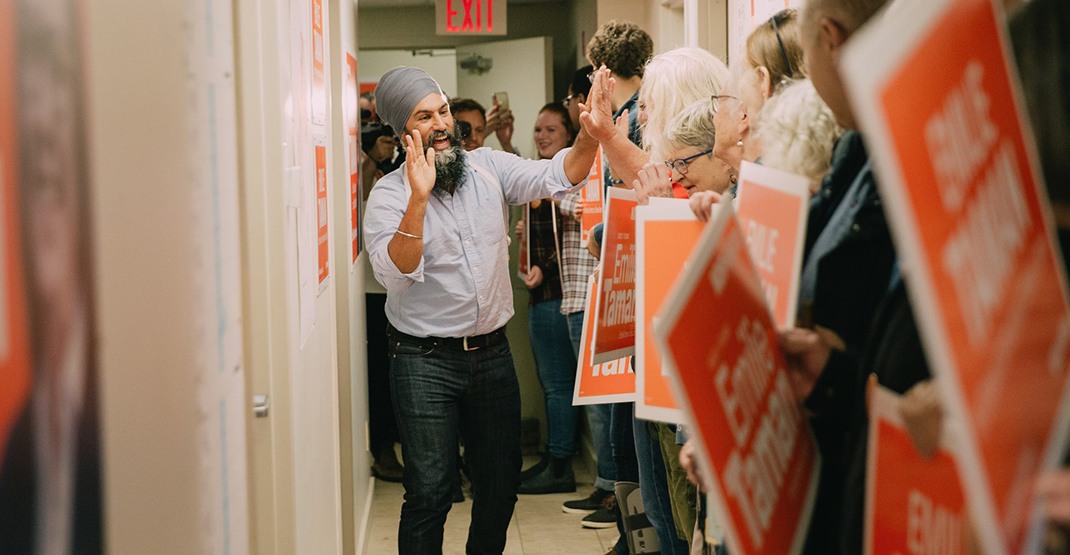
NDP Leader Jagmeet Singh/Facebook
Although they have no formal election platform on the issue, the NDP is decidedly cannabis-friendly.
The party has officially stated that they will not reverse Bill C-45 and party leader Jagmeet Singh has gone on record to strongly endorse legal, recreational weed. Aside from that, though, they have been relatively tight-lipped on this issue.
But the NDP approach to cannabis may be better discerned through action than words in any event.
Former NDP MP Murray Rankin tabled a bill during his tenure in office which sought to expunge historical, non-violent cannabis offences rather than pardon them. This bill was ultimately rejected by the Liberals.
In May, NDP Deputy Leader Aleandre Boulerice called on the Liberals to remove the tax on medical cannabis. The party tabled Motion M-198, which sought to recognize that healthcare is a fundamental human right and asked for medical cannabis to be considered a medication like all others. It also sought to dedicate more capital to research on medical cannabis.
For this part, Singh has recently been critical of the Liberals in their approach to the legalization of edibles, concentrates, and topicals. He has said that he feels that the delay around legalizing these products has been unnecessary and that all cannabis products should have been legalized together.
All in all, the NDP appears to be a party that will make power moves when it comes to the future of legal cannabis rather than being all talk and no green.
Green Party
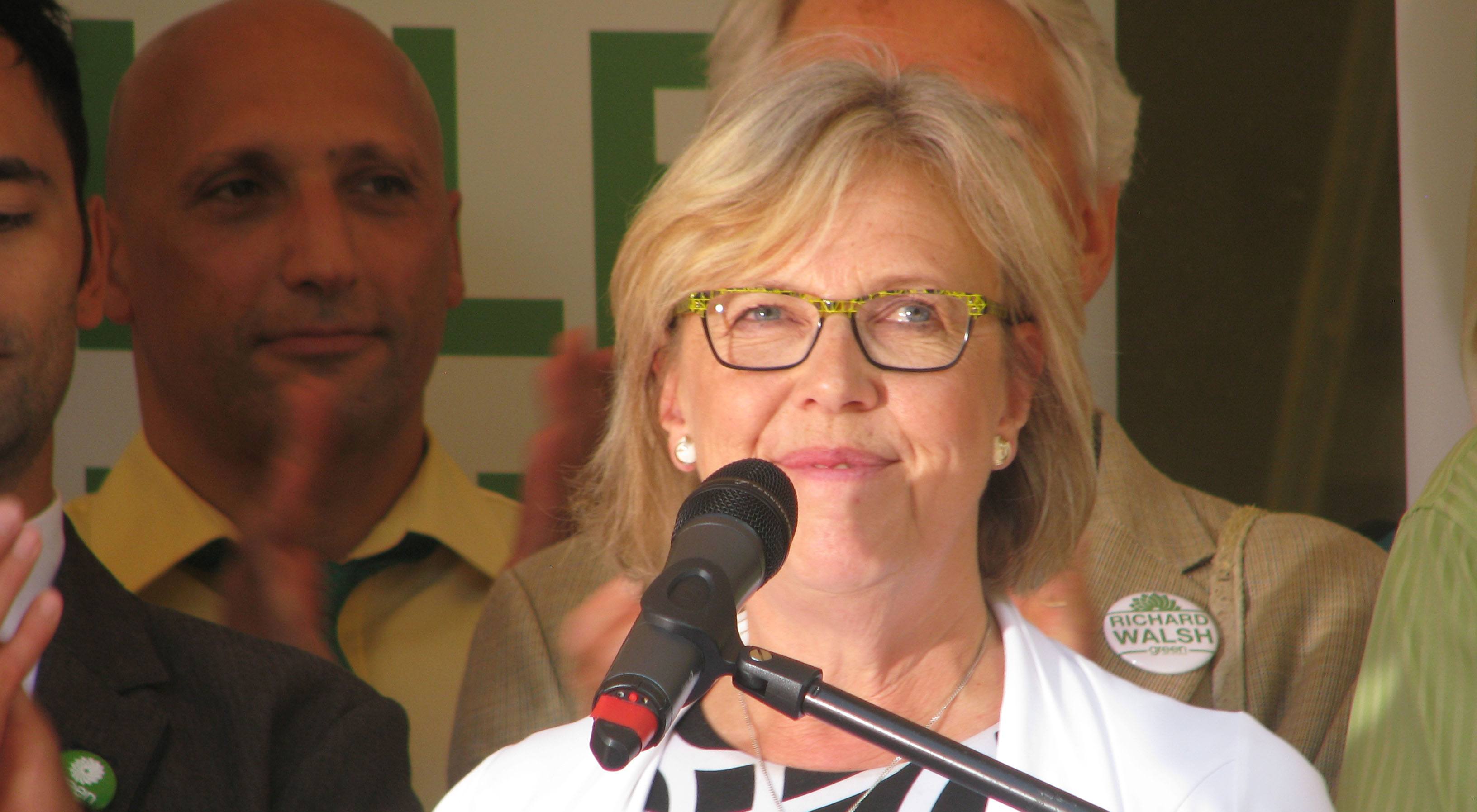
Elizabeth May/Flickr
Decidedly unironic, the Greens have the most progressive approach when it comes to the future of cannabis.
Party leader Elizabeth May has presented a comprehensive platform in relation to this issue and has publicly announced her intention to undo many of the cannabis blunders that have been done so far.
For one, May wishes to lower the price of legal cannabis in order to make it competitive with illegal supplies and effectively weed out the black market. She points to the fact that according to 2019 figures from Stats Can, 38% of Canadians are still buying their weed from illegal sources.
She also wishes to remove the sales tax on all medicinal cannabis products and to eliminate the requirements for excess, wasteful plastic packaging.
Finally, the Greens feel that outdoor production should forge ahead in the future, rather than forcing cannabis to be grown in problematic, wasteful and dangerous underground bunkers. On top of that, they wish to impose organic production standards for all licensed producers and to ensure that your cannabis is safe, healthy and environmentally sustainable.
All in all, it seems that the Green Party is the party most dedicated to improving cannabis and advancing the cannabis industry well into the future, while also advancing their green policies.
Peoples Party of Canada
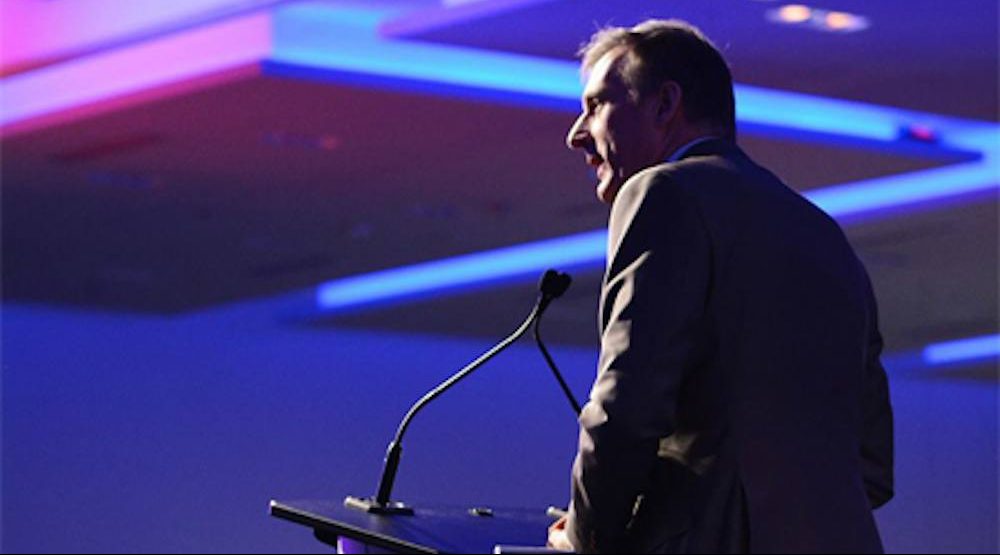
MaximeBernier.com
It’s safe to say that the PPC has been controversial, and with Maxime Bernier at the helm, the controversy has not quieted during the election.
When it comes to weed, though, Bernier has been vocal about insisting that he will not reverse Bill C-45, which legalized cannabis on a federal level.
According to The Growth Op, he is also one of the only major political party leaders to publicly admit to cannabis consumption. Bernier has been somewhat open about his indulgences.
He has also publicly touted the support of so-called “Prince of Pot” Marc Emery while running for leader of the CPC.
Emery is no stranger to controversy himself. Earlier this year, Emery suffered a “Me Too” moment that damaged his reputation and largely ostracized him from the cannabis community that he has advocated in for so many years.
But not everyone in the Peoples’ Party is so pro-pot.
PPC candidate Laura-Lynn Tyler Thompson recently said that her party takes no official position on legal weed. However, she put herself on record as opposing recreational access to cannabis and went as far as to say that she does not support drug harm reduction efforts, equating them to “enabling” addicts.
All in all, it seems like the PPC approach to cannabis is consistent with its overall political reputation of being controversy-laden and oddly disjointed.




You must be logged in to post a comment.